
Drums, Whips & Firelight — Witchy Winter in Wekerle, Budapest
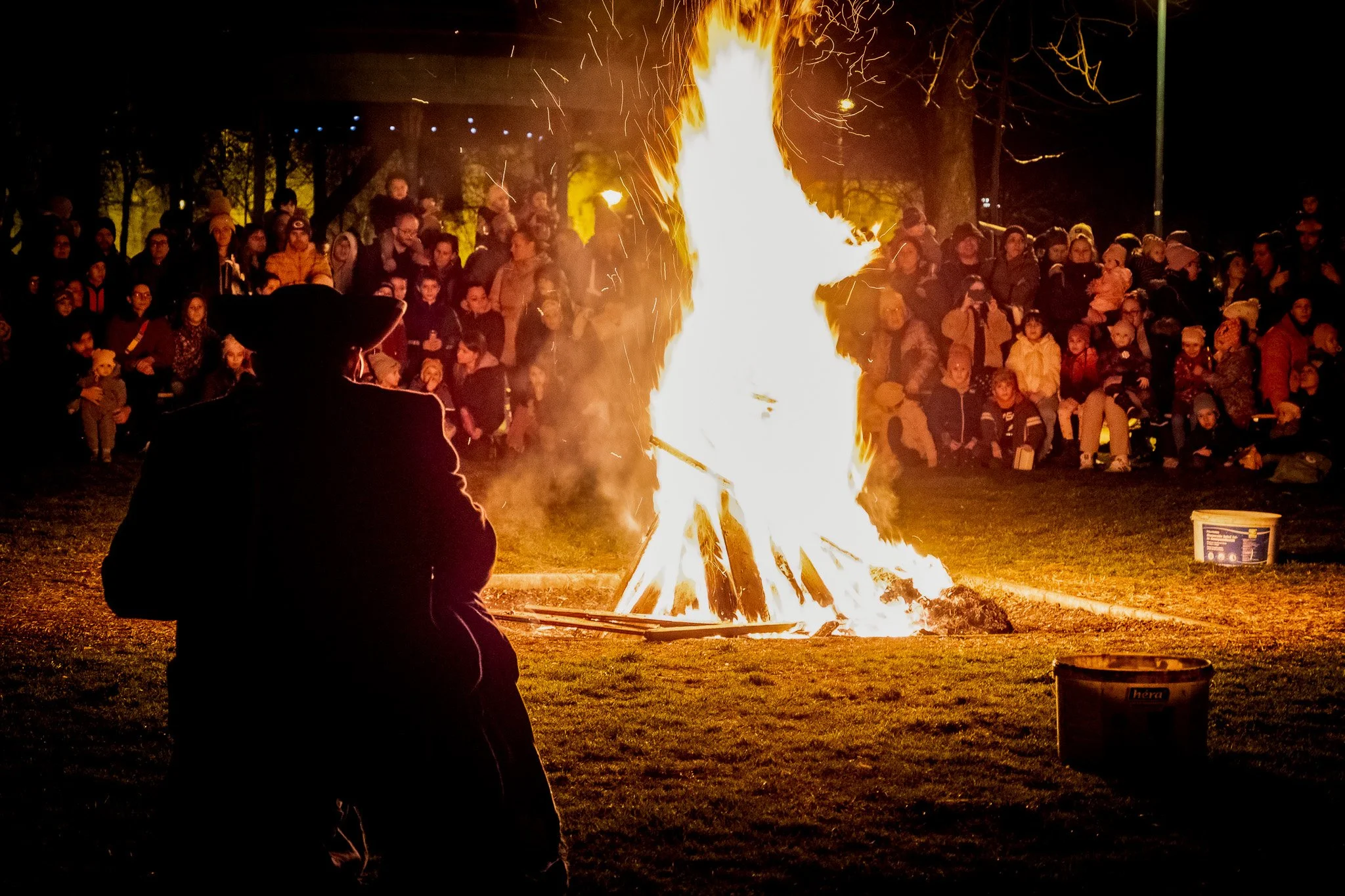
Hungarian Horse Herder by the Bonfire — complete with empty buckets
photo by Tito Slack @titoslackphoto
Really, in Budapest, anything can happen. In the whirlwind of strange conservatism, political debates, and a questionable social system in place, Hungary somehow always has something to draw you in. For example a magical district and a pagan tradition with a nice, big bonfire and a few hundred singing locals.
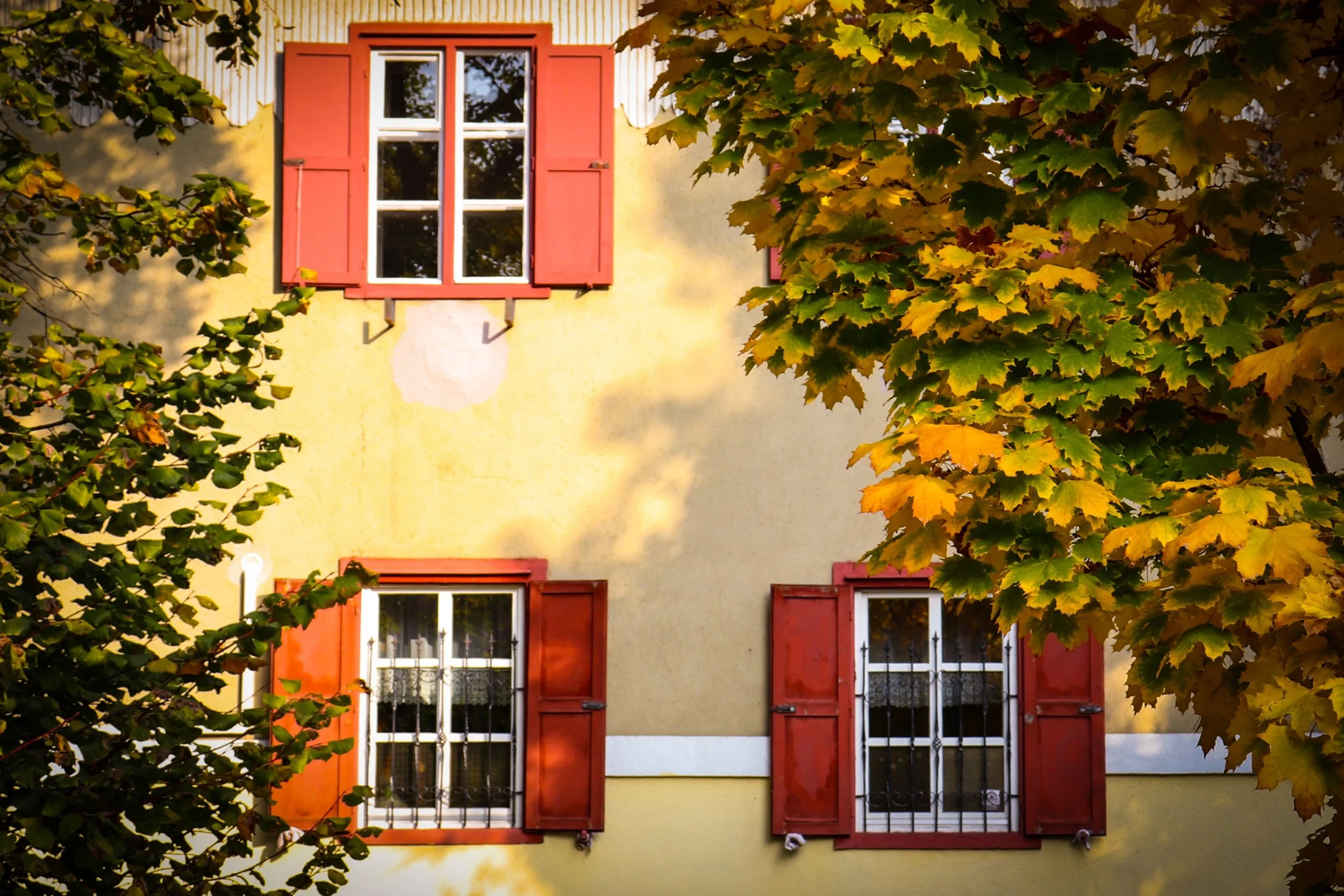
Signiture shutters at the Wekerle Estate, Budapest
photo by Melì
Welcome to Wekerle
This weekend I visited the Wekerle estate, also known as the XIX district of Budapest, to celebrate leaving winter behind and invite the lovely warm rays of spring sunshine. Here is my first-hand report of this slightly witchy and absolutely family-friendly event at one of the most unique locations in the city.
Always on the lookout for a Saturday day trip, we set off again. Only half an hour away from the centre, this time we found ourselves between tidy gable-roofed houses flashing their one- or two-storey glory in soft pastels. Charming wooden shutters, frame the small windows that line the roads leading to the enormous main square, called Kós Károly tér after the design genius Károly Kós, who dreamed up this place in the early 20th century.
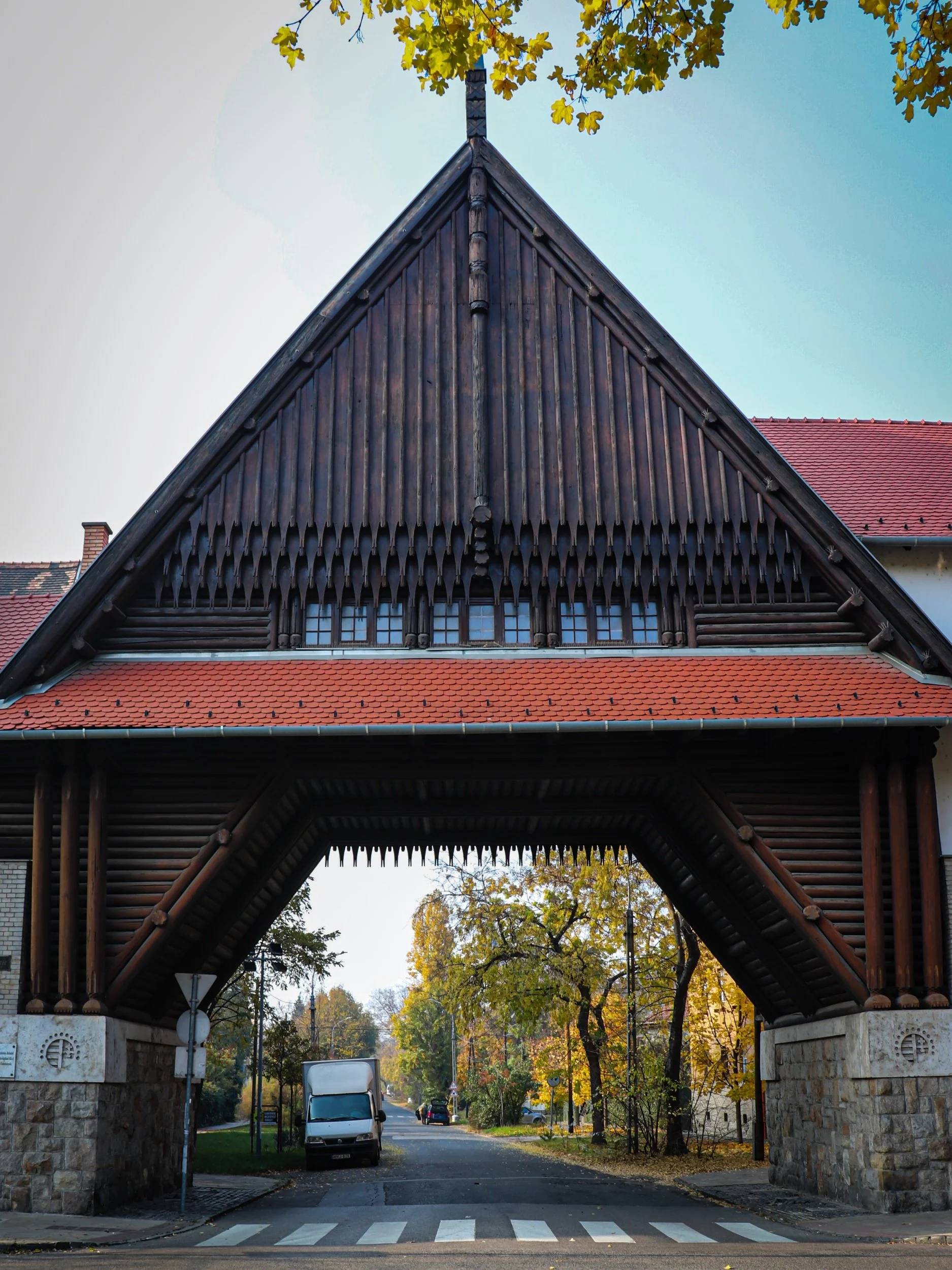
The Wekerle Gate, Budapest - straight from the old archives before my photographer days
photo by Melì
The round square
The enormous square, surrounded by an impressive and slightly confusing square-shaped roundabout, is fringed with more neat houses, a church, and the estate’s signature symbol: the Wekerle Gate. Standing in front of it is quite an experience — definitely not something one would expect in Budapest. Its sheer size is as impressive as the elegant choice of colours. The tall triangular gate, with its pointed wooden top, overarches the two incoming lanes leading to the roundabout. The dark wooden structure is placed on white, crisp, city wall–like pillars. It is breathtaking.
The gate itself is strongly inspired by Transylvania’s famous carved wooden gates, but this one is much bigger as well as a lot simpler — a perfect blend into a humble, medieval-inspired design that is just restrained enough to fit into the cityscape without mocking itself.
To the greatest enthusiasm of the little ones, the square is home to a large playground, as well as two big fields and even a little hill. Right by the church and in the very heart of the Wekerle estate, this really is a perfect location for gatherings, and the locals are more than happy to oblige.
Together
With a unique neighbourhood comes a unique community. Rich in programmes, the local community hall and charitable partners organise many events. Not only do they showcase Hungarian traditions, but they also allow community spirit to thrive, creating an atmosphere where you easily forget about your smartphone and find yourself connecting for real instead.
This weekend marked the Wekerlei Téltemetés és Tavaszköszöntés — a Winter Farewell and Spring Celebration in Wekerle. We began at the community hall, already packed to the brim with smiling children and rosy-cheeked visitors.
Inside, long tables had been turned into little islands of creativity. You could craft a frightening mask or a noisy rattler to chase winter away, or shape a tiny poppet — the so-called Kiszebáb — the symbolic figure of winter that would later be carried to the bonfire.
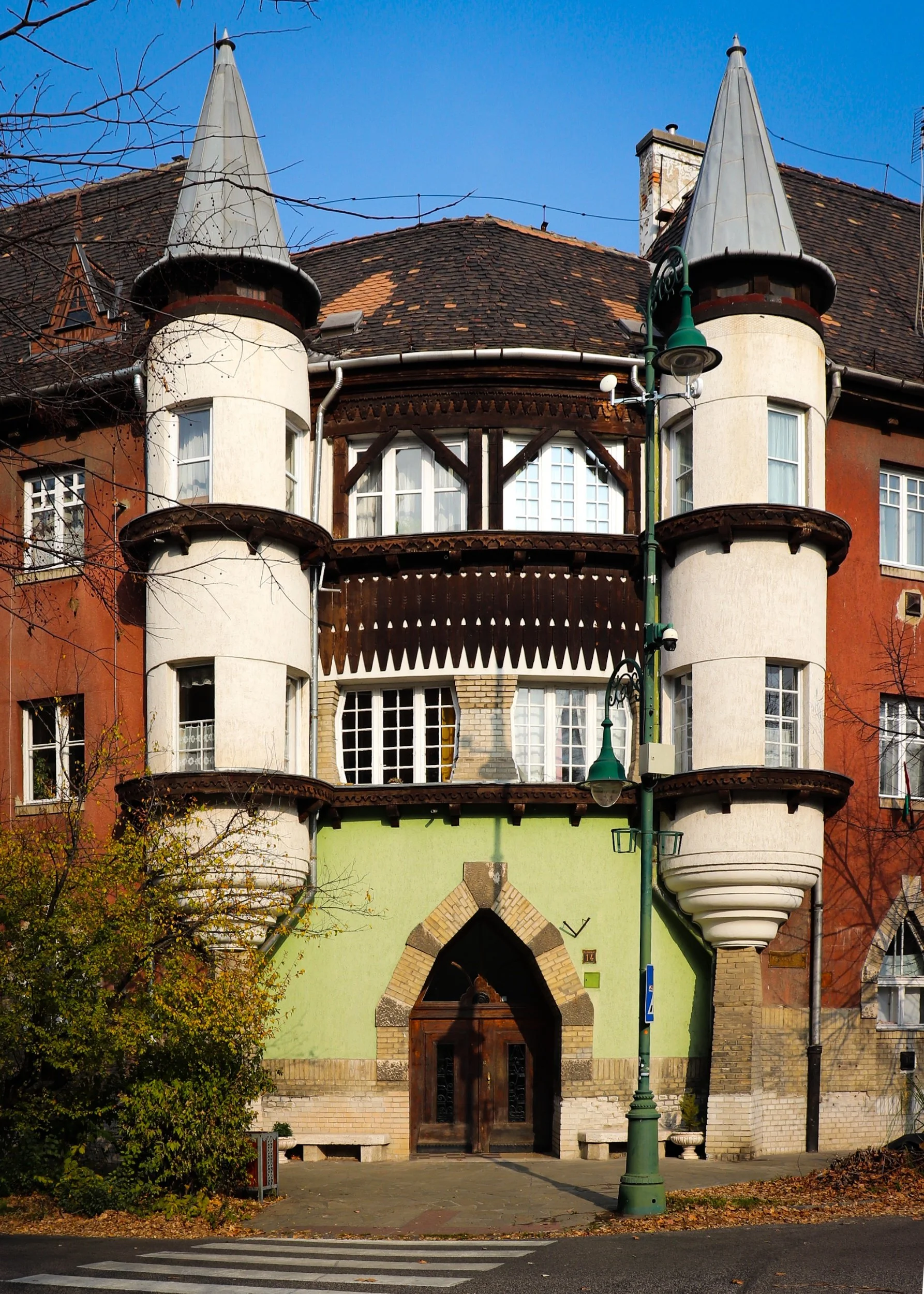
‘Just’ a building at the Wekerle Estate, Budapest
photo by Melì
My absolute favourite moment, though, was quieter. We were invited to write down our worries on small strips of fabric, little textile confessions, to be thrown into the fire at dusk — a much needed ritual of letting go before spring arrives.
While we were busy crafting, the local folk singing group started to sing, inviting us to join. The atmosphere was absolutely magical, like flying back hundreds of years in time — crafting together while making music. It filled our hearts with a real sense of “here and now.”
Drums and whips
Meanwhile, in the middle of the hall, the large Kiszebáb — a scarecrow-like, faceless female figure symbolising winter and all the hardships the cold season brings — was slowly taking shape. The children eagerly helped stuff it with hay and add the final touches.
Once finished, our textile confessions were tied to its arm, and it was ready to head towards the main square. Escorted by drummers and traditional Hungarian horse herders with their famous cracking whips, the noisy procession moved forward, chanting verses and making as much sound as possible — doing an excellent job of scaring away the frost.
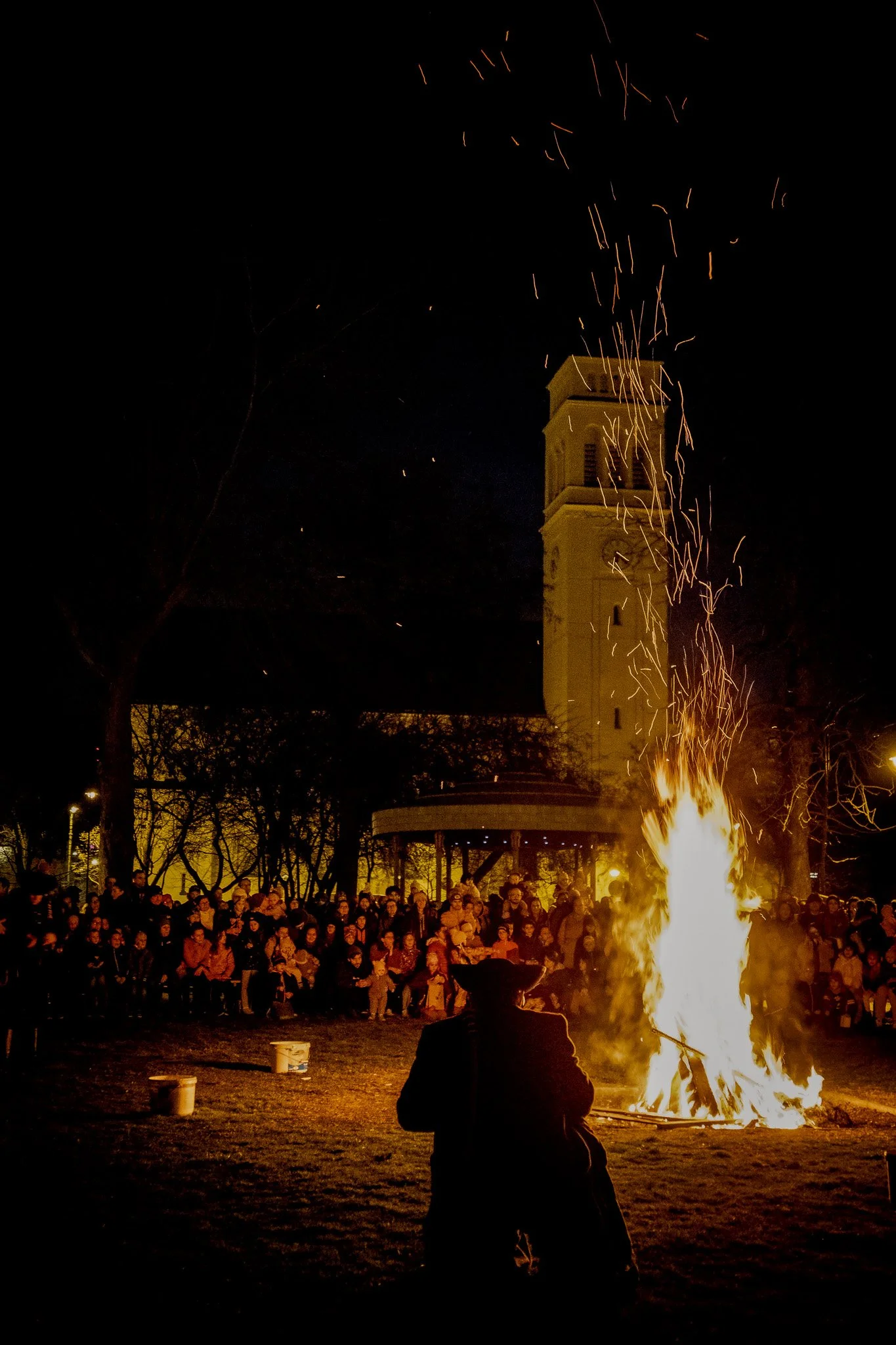
Hungarian Horse Herder by the Bonfire at Wekerle, Budapest
photo by Tito Slack @titoslackphoto
Bonfire
The noisy crowd arrived in the middle of the square, where hundreds of people had already gathered in a wide circle around the fire pit. The procession merged with them, and with drums beating and whips cracking in steady rhythm, we all began chanting short verses as the bonfire was lit.
At the climax, the Kiszebáb was thrown onto the flames, and the crowd burst into song once more. Anyone could join in, but nothing was forced — no awkwardness, no cringe — just a genuinely lovely opportunity to let things go and be part of something shared.
As the flames reached for the skies, lighting up the excited little faces gathered around, we adults too stared into the orange glow and enjoyed the night as much as the little ones. Once the fire died down, we slowly dispersed, but the square and the playground were still busy for a while.
Give me a break
The programme was free and made possible by local charities. They organise these kinds of events regularly, so it’s worth looking out for upcoming ones – and of course supporting the charities behind them.
It was a perfect afternoon programme: a celebration of the here and now, and a special moment to be part of a community and do something our ancestors have been enjoying for centuries. And the best part? It truly gave me a break. I was so absorbed by the roaring fire and the singing crowd that I didn’t even feel like taking out my camera – and I had absolutely no desire to look at my phone. (Thankfully, my lovely partner, on the other hand, felt inspired by the chanting crowd, so we do have some footage! As well as I reached for my old archives.)
More about end-of-winter day trips and traditions? Check out my article here on how to chase away cabin fever with the Busós.
Over to you
How do you survive the last chilly days? What kind of end-of-winter traditions do you have?
Love,
Meli
