
Saving the World in Pyjamas: The Boar, the Badger, and the Bedtime Revolution
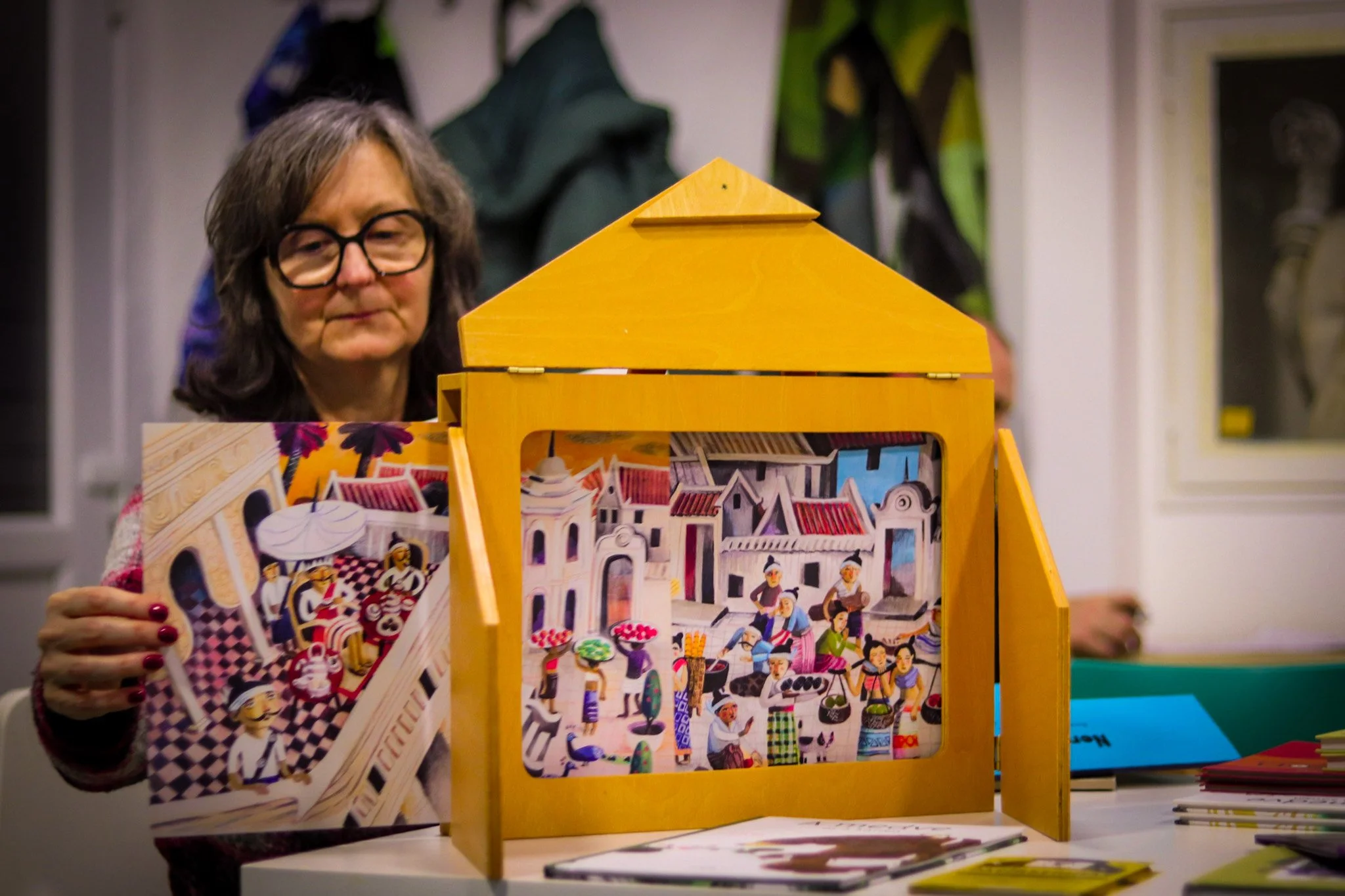
Papírszínház in action — where analogue storytelling meets modern conversations about climate and care, Brought to life by Csimota Publishing House. Photo by Melì
A Roundtable on Green Thinking and Children’s Books
We sit down comfortably, breathing in the sweet scent of our little one—soft, warm, and all huddled up, ready to step into another magical universe… The book opens, and the adventure begins. But what kind of adventure should it be? Should we talk about fairy tales and positive things only, or can we talk about reality and topics like environmental consciousness or climate change? If so, how do we educate without scaring kids—while still having fun?
Discussing these questions and more, I took part in a book showcase and roundtable discussion organised by the Anyahajó Civil Organisation for Families in Budapest, Hungary. These conversations were as colourful and creative as the books of the four publishers and creators who spoke about their approaches and challenges in presenting the many sides of green thinking.
Listening through the lens of a writer, parent, and book lover, in this article I place everything into cultural context and share some of the answers and approaches I discovered. Let’s go! 🙂
The Magic of Choosing a Story
When we pick up a book, we pick up an adventure—one we choose, control, and enjoy freely. Wherever the book takes us, we willingly go, absorbed in a world written, painted, and designed for us.
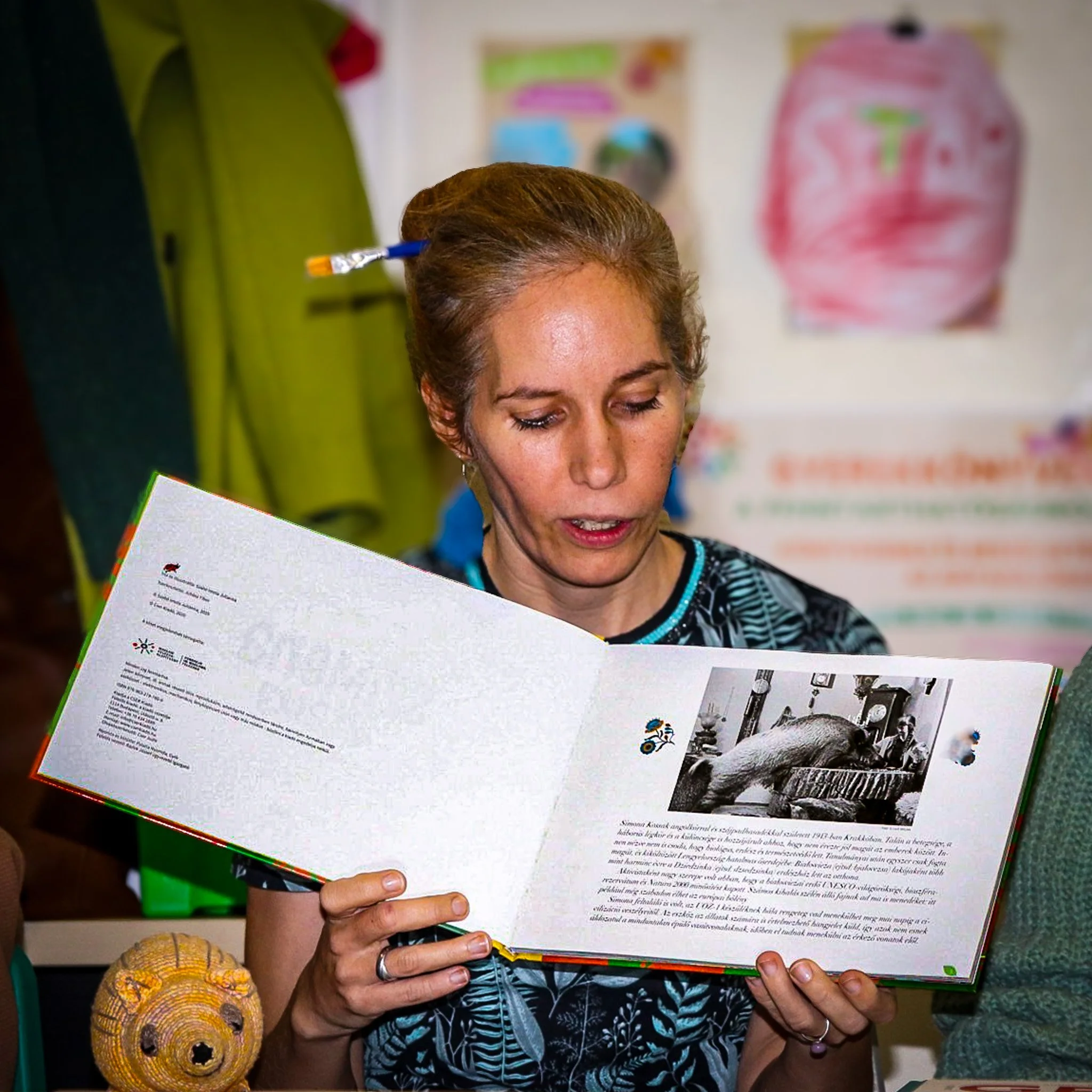
Into the bed goes Zsabka the wild boar, straight from Imola Anna Szabó’s true story of girl power and forest-born innovation. Photo by Melì
In life, we can’t always choose what happens next. But when we choose a children’s book—especially one we’ve carefully selected—we know exactly what we’re bringing into our home. That freedom is the real magic of reading: dedicating time to something we genuinely want to experience, and, when it comes to children’s books, sharing that experience closely and lovingly with our little ones.
So it’s no wonder we don’t bring just any book into the protected space of reading time. The stories we choose become extensions of our hands as parents. They carry our values, our hopes, our conversations. Through books, children imagine, think, question, play, and reshape the world—and so do we.
Where Do Difficult Topics Fit?
So how do trickier issues like climate change and “green thinking” fit into this pure and protected space? Can we explore them without frightening children—yet still encourage them to think deeply about how we live in the world, so that tomorrow still feels safe?
There is an increasing need to talk about this, especially as we rethink how to live with nature rather than simply use it up without a plan. Fortunately, a growing range of books on environmental awareness exists internationally and in Hungary. But before diving into what Hungary offers today, it’s worth looking at the cultural background.
Trash Talk or Serious Business: The Weird Journey of Climate Awareness
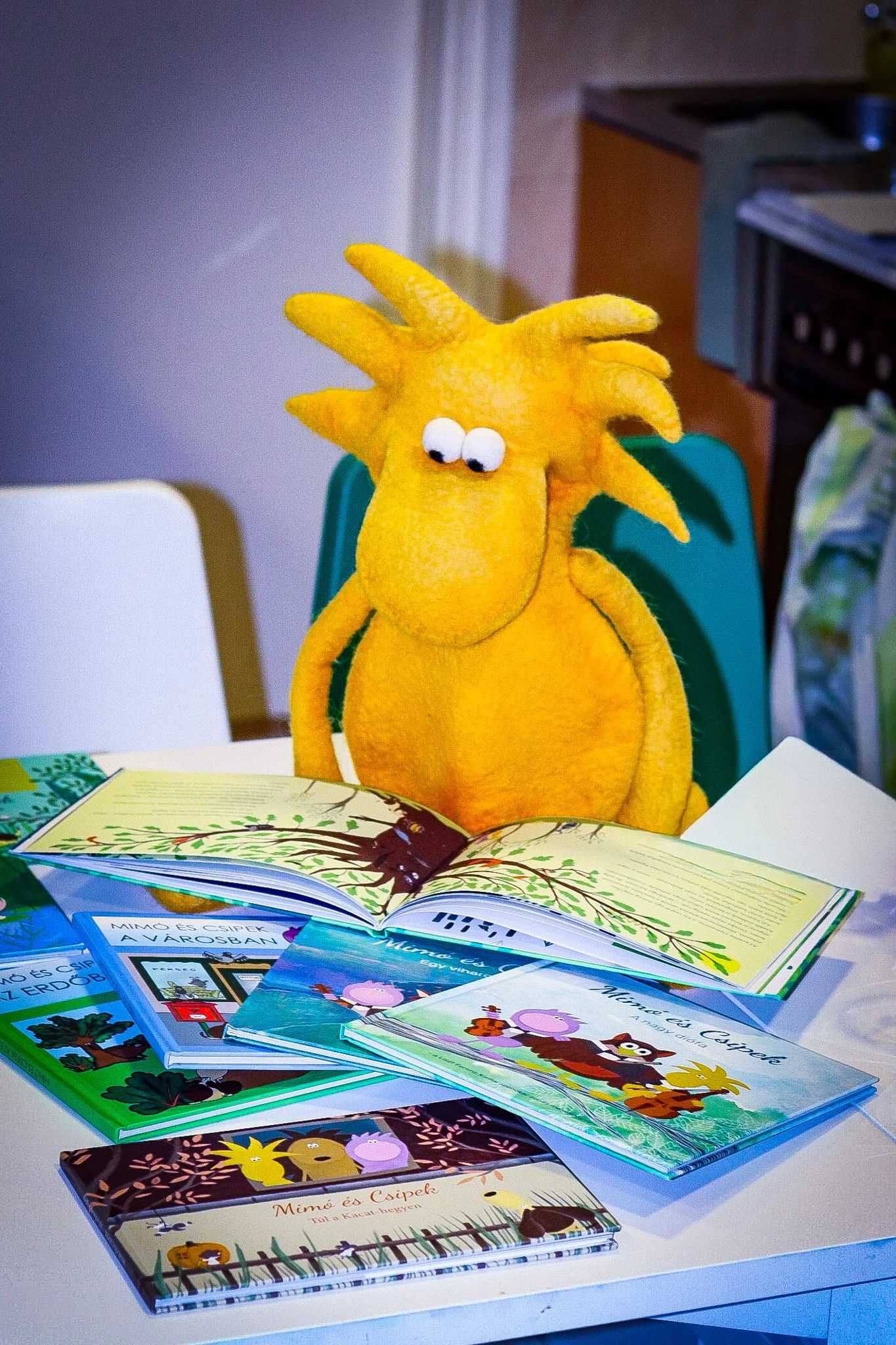
Mimó, taking his role as eco-ambassador very seriously… Photo by Melì
Consumerism shaped the West—and alongside it, slowly but surely, came the whisper of environmental consciousness. In the 1970s, Sesame Street’s Oscar, living in a trash can, was already teaching children about waste and responsibility. Since then, climate topics have travelled across the globe, though not at the same pace.
Climate change is a deeply cultural topic. For some communities, especially Indigenous nations across the Americas, living in harmony with nature has always been central. In Western societies, climate awareness became “a thing” once the early signs of damage caused by our lifestyles could no longer be ignored. In places where daily survival is already a struggle, however, climate change can feel distant or abstract. When food, health, and safety are uncertain, one more danger—no matter how global—simply falls lower on the priority list.
Ironically, environmentally conscious solutions often make it easier for people to survive with less, yet the education surrounding them does not always reach those who need it. Hungary sits somewhere in the middle: positioned between East and West, capable of innovation, yet often limited by its own systemic challenges in education, democracy, and healthcare. Still, it is a country full of thinking, caring people who want healthier life choices—and children’s books are one of the easiest starting points.
Eco-Pioneers Close to Home
Climate awareness becomes real when we feel connected to it. That connection often begins with what children can see and touch—local wildlife, familiar landscapes, and the nature they encounter firsthand.
I still remember the moment I saw a baby wild boar squealing as its family squeezed through an electric fence in the Gemenc Forest Reserve to reach food. The scene was so vivid and chaotic that environmental issues suddenly became personal. I found myself searching for children’s books rooted in our actual environment, not someone else’s.
The same thing happened with Lake Balaton. I spent so much of my childhood swimming there that now I want my children to understand how fragile its ecosystem is, and why it matters. Sometimes what is closest must be introduced first.
Hungary has no shortage of beautiful, easy-going books on these themes, filled with illustrations that captivate both young readers and their parents. Here are four heartfelt, fully home-grown approaches to green storytelling.
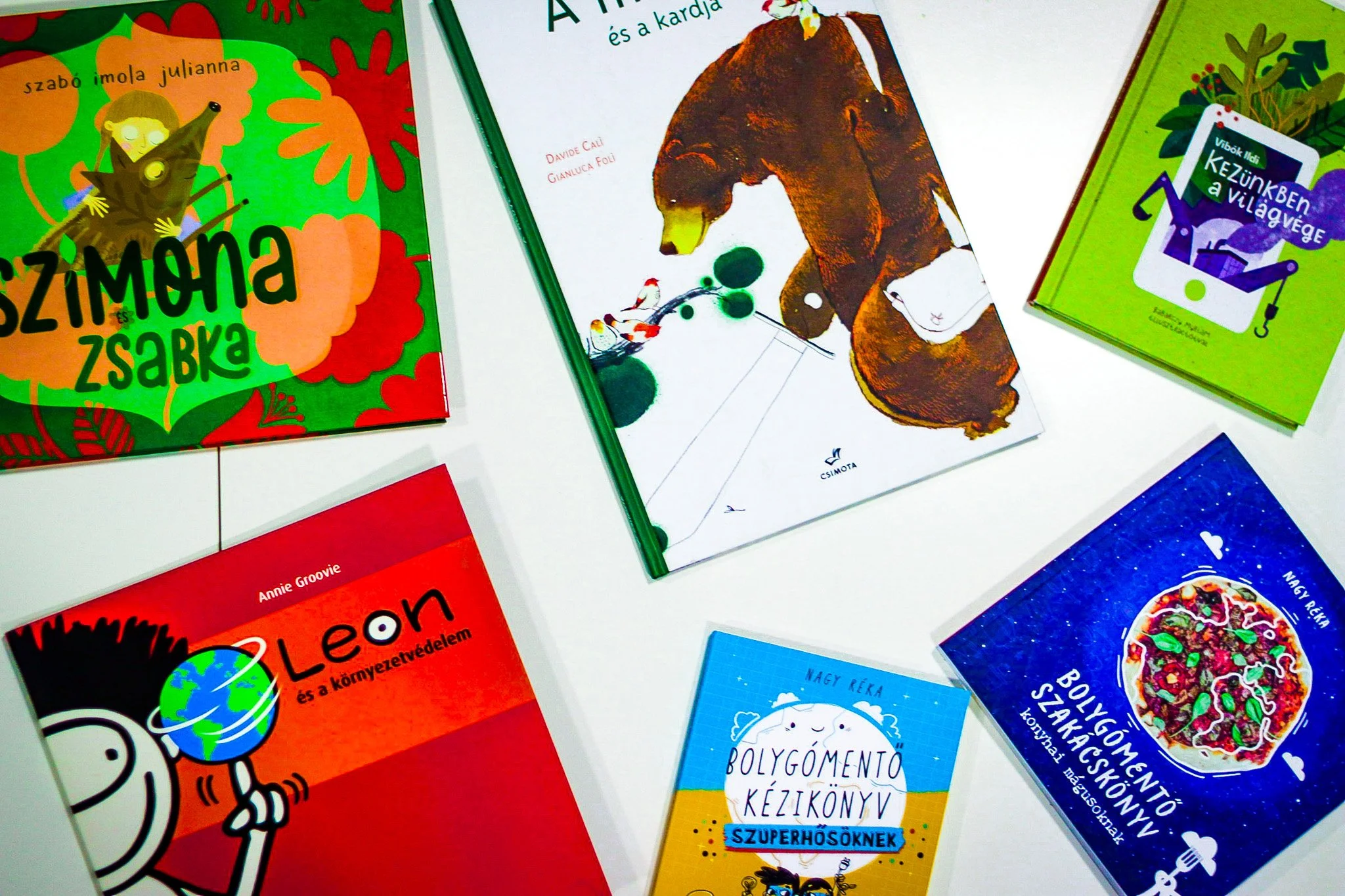
Eco-themed Hungarian children’s books showcased at the Anyahajó event on green thinking and storytelling.
Photo by Melì
Four Hungarian Approaches to Green Storytelling
Imola Julianna Szabó — Forest Stories with Heart
Writer, illustrator, and designer Imola Julianna Szabó brings to life the extraordinary story of Simona Kossak. A biologist, preservationist, and inventor, Kossak lived deep in the forest with a wild boar she raised from infancy. Their shared adventures—protecting wild boar populations and other forest creatures as industrial expansion threatened their habitat—become tender and powerful through Szabó’s warm, detailed illustrations and storytelling.
Mimó és Csipek — Exploring Nature as a Family
Mimó és Csipek, created by Bábozd Zöldre Egyesület, invite children and parents into the joy of nature walks. Their stories were developed with environmental scientists and creatives, resulting in books that blend story, science, and playfulness. Each book includes a mini-encyclopaedia to help children recognise real animals and plants. Some of the stories even come alive through music.
Csirimojó — Tackling Big Topics with Kindness
Csirimojó, a publishing house and non-profit organisation, specialises in breaking taboos gently and honestly. Their books focus on teamwork, empathy, and problem-solving through imaginative characters, such as a badger who builds a particle accelerator, or Greta the whale, who can only be saved through genuine group effort. They stretch both storytelling and physical book format, experimenting with new shapes, sizes, and themes ranging from grief to sustainability. With this, they expand not only our perspectives but Hungarian children’s literature itself.
Papírszínház — Storytelling in a Magical Little Theatre
Papírszínház (Paper Theatre) tells stories through a small house-shaped wooden theatre box, where illustrations are flipped by hand like analogue slides. Each image feels like a piece of art. They have been bringing environmental themes to communities for more than a decade, proving that storytelling can be screen-free, tactile, and captivating for larger groups all at once.
by Melì
A Joyful Ending
Talking about climate change with kids might sound as difficult as convincing a toddler that broccoli is a friendly little tree. But with the right books, the right illustrations, and the right moments curled up under a blanket, the conversation becomes joyful, meaningful, and surprisingly natural.
And who knows? One bedtime story about a wild boar, a clever badger, or a whale named Greta might just plant the idea that saves the planet.
At the very least, it will earn you ten extra minutes of cuddle time. And honestly—if that isn’t saving the world, I don’t know what is.
Over to You
Do you enjoy reading about these topics?
What are your favourite books connected to nature or the environment?
Still hungry for green ideas? Or want to hang out with a brilliant bunch of humans? Explore the links below:
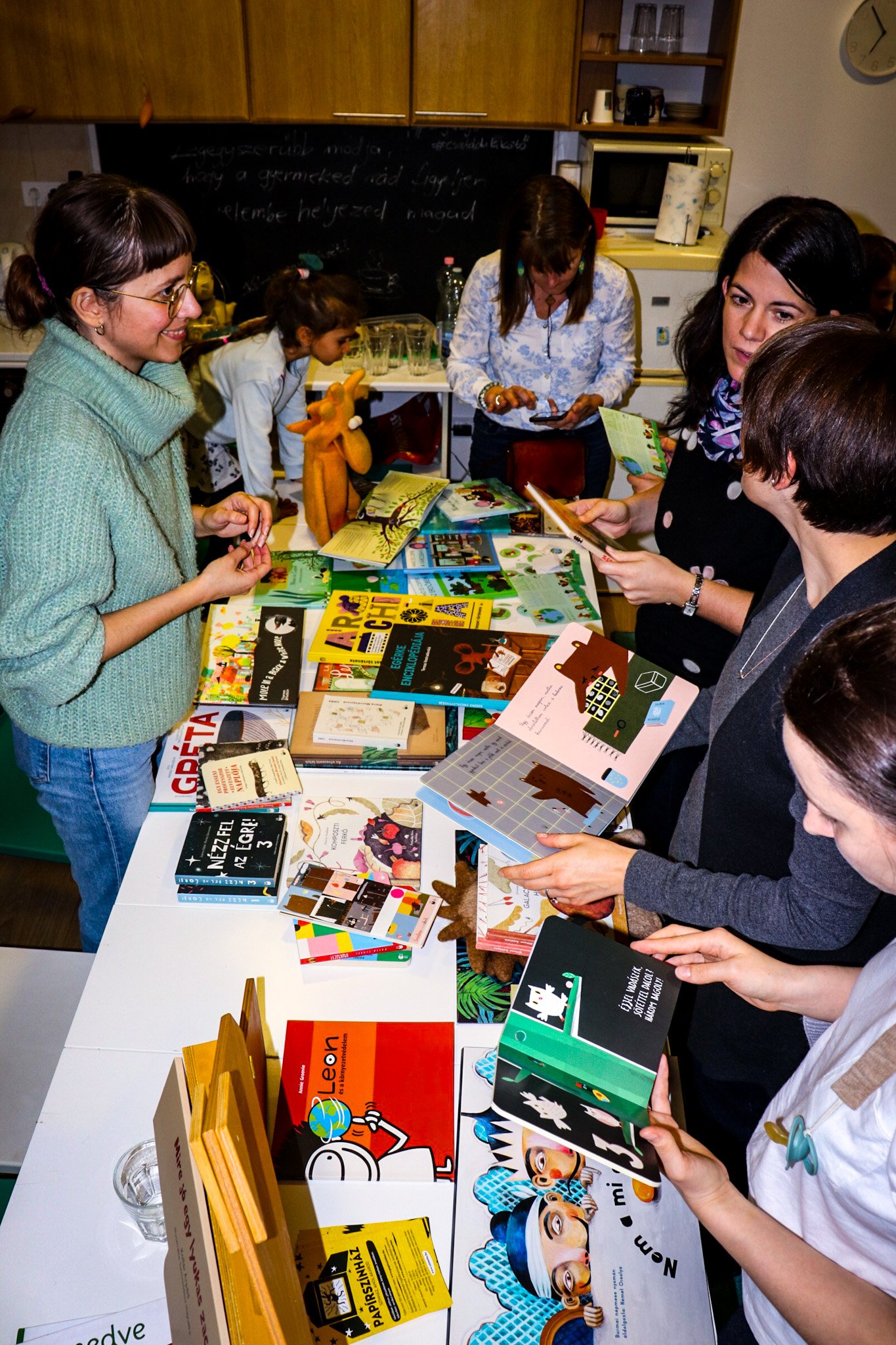
Beautiful, bookish chaos with Peťovská Flóra from Csirimojó. Photo by Melì
Bábozd Zöldre Egyesület
Environmental education organisation and creators of the Mimó és Csipek series, helping children connect with nature through stories, activities, and playful learning.
🔗 https://zoldre.hu/
Csimota Könyvkiadó
Innovative Hungarian children’s book publisher known for experimental formats, Papírszínház editions, and bold storytelling.
🔗 https://csimota.hu/
Csirimojó Kiadó
A creative, boundary-pushing children’s publisher focusing on empathy, difficult topics, and imaginative eco-aware storytelling.
🔗 https://csirimojo.hu/
Szabó Imola Julianna
Writer, illustrator, and visual artist whose poetic, immersive work includes Szimóna és Zsabka — a forest-inspired story at the heart of your article.
🔗 https://csimota.hu/product_author/szabo-imola-julianna
Anyahajó – Családi Műhely (Family Support Organisation)
A community space in Budapest supporting parents, children, and families through workshops, discussions, and creative programmes. The roundtable event in your article was hosted here, bringing together educators, artists, and publishers to explore eco-conscious storytelling.
🔗 https://www.anyahajo.com/
Cheers,
Meli
